
Vertigo can stem from two distinct sources: the inner ear or the central nervous system. These origins define the two main types – peripheral and central vertigo. Curious about their differences and related conditions? Dive in with us! And if vertigo’s got you spinning, our chiropractor in Plano offers a natural solution to steady your world.
What is Peripheral Vertigo?
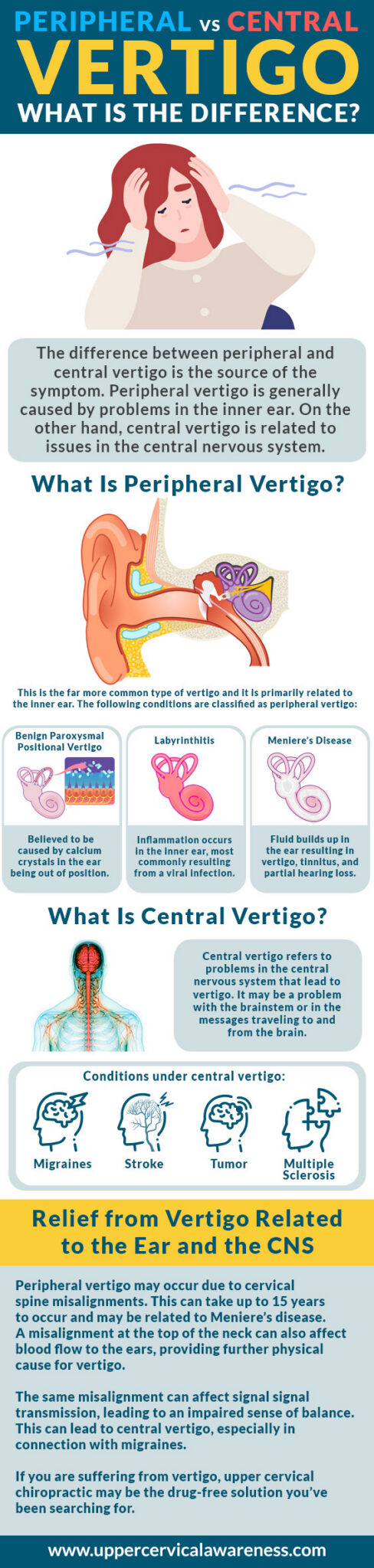
Peripheral vertigo is the most common type of vertigo, caused by a problem in the inner ear or the vestibular nerve that connects it to the brain. It produces a spinning sensation along with symptoms like nausea, balance issues, and rapid eye movements—often triggered by changes in head position. Common causes include BPPV (loose inner ear crystals), Meniere’s disease, and inner ear infections.
What is Central Vertigo?
Central vertigo is dizziness caused by a problem in the brain—typically the brainstem or cerebellum—rather than the inner ear. It’s less common but often more serious, and may stem from conditions like stroke, migraines, or multiple sclerosis.
Peripheral vc Central Vertigo:
To schedule a consultation with Dr. Taylor, call our Plano office at 972-818-5993. You can also click the button below.

Frequently Asked Questions
How do I know if my vertigo is central or peripheral?
Peripheral vertigo usually brings intense spinning that’s triggered by head movement, often with nausea and ringing in the ears. Central vertigo tends to be milder but more constant, and may come with neurological signs like double vision, slurred speech, or trouble walking.
A thorough evaluation helps pinpoint the source so your care can be matched to what’s actually causing your symptoms.
What test differentiates peripheral and central vertigo?
The HINTS exam (Head Impulse, Nystagmus, Test of Skew) is the primary bedside test used to tell the two apart. Doctors also use the Dix-Hallpike maneuver to confirm peripheral causes like BPPV.
Identifying the type accurately allows us to guide you toward the most appropriate and supportive care.
Does central vertigo ever go away?
Yes, central vertigo can improve once the underlying cause—such as a migraine or medication issue—is addressed, though recovery may take time. Cases tied to ongoing neurological conditions often require continued management.
Supporting healthy nervous system function through gentle care can help your body adapt and find better balance over time.
What triggers central vertigo?
Central vertigo is triggered by issues in the brain, most often migraines, stroke or reduced blood flow, multiple sclerosis, or certain medications. Tumors or head injuries affecting the brainstem or cerebellum can also be responsible.
Because the nervous system is central to balance, supportive care can play a role in your overall management plan.
What are the symptoms of peripheral vertigo?
Peripheral vertigo causes a strong spinning sensation, often triggered by changes in head position, along with nausea, vomiting, and balance problems. Many people also experience ringing in the ears, a feeling of fullness, or some hearing loss.
Gentle adjustments can help relieve tension and support the inner ear and nervous system in managing these symptoms.
About the Author